understood the action by the Congregation for the Doctrine of the Faith (CDF) means the Co Fermanagh priest, regarded as liberal within the Catholic church, must now submit his writings and broadcasts to an official censor.Click on the following for more details: Fr Brian D’Arcy latest priest to be censured by Vatican - National News - Independent.ie
The 67-year-old member of the Passionist Order has spoken out against mandatory celibacy for priests and has been a fierce critic of the church's handling of child abuse scandals in Ireland.
A number of Irish clerics have recently been disciplined by the church for expressing liberal views.
Father Tony Flannery was forced to stop writing for a Redemptorist magazine
Fr Flannery, a founder of the association, had his monthly column with the religious publication Reality pulled on orders from Rome.
A second priest, Father Gerard Moloney, the magazine's editor, was ordered to stop writing on certain issues.
Meanwhile, in a Holy Thursday homily at St Peter's Basilica in Rome earlier this month, Pope Benedict XVI warned that the church would not tolerate priests speaking out against Catholic teaching.
Last night Fr D'Arcy said he "disappointed" there was not better respect for freedom of speech.
"Nobody wants to be censured by their own organisation," he added.
Showing posts with label Rights of Catholics. Show all posts
Showing posts with label Rights of Catholics. Show all posts
Monday, May 7, 2012
Fr Brian D’Arcy latest priest to be censured by Vatican - National News - Independent.ie


Monday, April 23, 2012
Parish Rights And Obligations

Parish Rights And Obligations
For the first time in the Church’s history, the 1983 Code of Canon Law contained a list of the rights and obligations of individual Catholics. (cc. 208-223). Even though a similar list of rights and obligations for parish communities was requested at the time, it was not forthcoming. Nevertheless, there are numerous canons that protect and regulate parishes, as well rights that arise from the theology of the local church and Catholic social teaching on subsidiarity.
This list is a brief summary of a more comprehensive list found in chapter six of The Parish in Catholic Tradition, by the preeminent canon lawyer, Fr. James Coriden. Fr. Coriden is one of three general editors of the Code of Canon Law and a professor on the faculty of the Washington Theological Union. He is careful to say his list is not meant to encourage legalism or to increase juridical battles over competing claims. Rather, his intent is to enhance parishioners’ self-understanding of their parish’s dignity and inherent authority as true churches and “not administrative units of some larger entity” (Coriden, p.80).
1. To Exist. The most fundamental right of a parish in canon law is the right to come into existence, be acknowledged and continue in existence (c. 374.1). Once a community of faith is formed and recognized it becomes a "juridic person" which by nature is perpetual unless it is legitimately suppressed or stops all activity for 100 years (c. 120.1). To be suppressed, the impossibility of continued life must be clearly demonstrated.
According to Fr. James Coriden: "A shortage of priests for pastoral leadership is not an adequate reason to suppress or combine parishes. Canon law strongly recommends liturgies of the word and group prayer in the absence of priests (c.1248.2), clearly implying that the life and worship of the community must continue even when priestly leadership is absent." Canons 516.2 and 517.2 say the pastoral care of a parish may be entrusted to others such as lay ministers or deacons. A diocese's presbyteral council, which is a body of parish priests whose function is to advise the bishop, must be consulted before any action is taken to suppress or merge parishes. Those with rights or interests in the parish must also be consulted (c. 515.2, 50, 1222.2). (Coriden, p. 73)
2. To Maintain Communion. Each local parish has the right and the duty to maintain active communion with the larger church. Some signs of this include a profession of the common faith, celebration of the sacraments and recognition of the church's governance, diocesan and universal (cc. 206, 209, 212.1,392.1). In addition parishes are obliged to contribute to and receive assistance from other parishes. This includes providing and receiving assistance in meeting worship needs, performing works of charity, supporting ministers in other communities and apostolic outreach (cc. 209.2, 529.2, 1261-1263).
3. To Equality. Canon 208 says that each local community of Catholics shares in the "true equality in dignity and action whereby all cooperate in the building up of the Body of Christ." This means that even though parishes differ in numbers of parishioners, wealth, geographical size, ethnic composition or other parameters they are all equal. Because local communities are stable gatherings of Christians in which the Spirit dwells, no parish is more privileged than another, and no parish is second-rate compared to others and may not be treated as such.
4. To Hear the Word of God and Celebrate the Sacraments. Canon 213 tells us that "The Christian faithful have the right to receive assistance from the sacred pastors out of the spiritual goods of the church especially the word of God and the sacraments." The right to the Eucharist is especially underscored because of its centrality to Catholic life and worship: "For a parish or other local community to be without the regular, weekly, worthy celebration of the Eucharist is a most serious deprivation. It is a violation of the community's right to the sacrament in which it finds its own fullest realization and self-expression. It constitutes a grave impoverishment that can gradually deform the community, that is, transform it into one no longer eucharistically centered. " (Coriden, p. 75).
5. To Parish Leadership and Ministry. Ordinarily, a priest pastor is to be entrusted with the pastoral care of a parish (c 515.1). But canons 516.2 and 517.2 make allowances for cases of pastoral need (such as no available priests) and permit pastoral care to be entrusted to others such as competent lay ecclesial ministers, lay leaders, deacons or religious. Pastoral leadership is to reside within the parish (c.529.1), see to the preaching of the word, teach the faith, provide sacramental preparation and "see to it that the Most Holy Eucharist is the center of the parish assembly of the faithful" (cc. 528.1 and 2, 757, 764-771, 835-836, 843.1).
The local congregation has a right and obligation to participate in the direction of its pastoral and financial affairs through consultation via the parish pastoral council and the finance council (cc. 536-537, 1280). It also has the right to appropriate administration of its monies and properties, organizational direction and pastoral guidance (cc. 519, 532, 1279-1289).
6. To Initiate and Sustain Activities and Services. Each local community has a right to begin and sustain the special projects for justice, charitable works, apostolic and evangelical outreach that one would expect from a group of believers whose faith is alive. (cc. 211, 215-216, 298-299, 384.2, 839.1) The community has a duty to promote social justice and assist the poor (c. 222.2). It has the right to form groups and associations to promote Christian witness in the world (cc. 215, 225, 227).
7. To Information, Communication, and Consultation. Parishioners have a right to timely and accurate information from both the parish and the diocese about matters that concern their parish. Catholic people and communities have the right and the duty to make known to church leaders and each other, their needs, desires and perspectives on matters concerning the good of the church (cc. 212.2 and 212.3, as well as Vatican II's Lumen Gentium).
8. To Formation and Education. Every Catholic Christian community has a right and obligation to assist all its members both adults and children in growing in their faith, knowledge and understanding of God's love through Jesus Christ. (c. 217) These rights and responsibilities include catechumenal programs, Catholic schools, and other suitable education (cc793-798, 800).
9. To Evangelization and Missionary Activity. Canon 211 tells us "All the Christina faithful have the duty and right to work so that the divine message of salvation may increasingly reach the whole of humankind in every age and in every land." Vocations (lay and ordained) to missionary work and financial help are fostered and sought from local faith communities
10. To Spiritual Growth. Each parish community must be concerned about and attend to its ongoing spiritual growth, repentance and conversion. It provides various special practices, prayers, and retreats to meet those needs." The Christian faithful have the right . . . to follow their own form of spiritual life consonant with the teaching of the church" (c. 214).
11. To Own and Use Goods and Property. On their own authority, and in keeping with canonical norms, parishes have the right o acquire, retain, administer and dispose of their own goods and property (cc. 1255-1256). To this end, each parish is required to have a finance council (c.537). Responsibility for and decision making about parish temporal goods belongs to the parish that purchased or inherited them (c.1256)
12. To Vindicate and Defend Rights. Local communities of "the Christian faithful can legitimately vindicate and defend the rights which they enjoy in the church before a competent ecclesiastical court" (c. 221.1). By virtue of their establishment as parishes (c. 515.3), parishes have standing to uphold their rights.
Limitations on Rights and Obligations.
Coriden says "Rights and duties are not absolute but conditioned or limited in at least three ways: (1) by circumstances, (2) by the rights of others and (3) by the common good.
1. Rights and duties are not exercised in a vacuum. Parishes and other local congregations exist in the real world. They must recognize and operate within the limits of concrete situations. Resources of personnel, time and money are limited; sometimes they can be stretched no further. No one should expect the impossible.
2. The prerogatives of one parish or community cannot be advanced to the detriment of others. A sense of balance, fairness and respect for rights must characterize the claims of each.
3.The principle of the common good governs rights claims and the demands of obligations. It calls for coordination. All of the communities within a diocese "have a place at the table." All must be heard from and accounted for, and each one must show consideration for the rest and for the good of the entire church."
In exercising their rights the Christian faithful. both as individuals and when gathered in associations, must take account of the common good of the church, and of the rights of others as well as their own duties toward others.
In the interests of the common good, church authority has competence to regulate the exercise of the rights which belong to the Christian faithful (c. .223.1, 223.2)
Reference: Coriden, James A. The Parish in Catholic Tradition: History, Theology and Canon Law. New York: Paulist Press, 1997.
The following is on the internet at: http://www.futurechurch.org/sopc/parishrightsandobligations.htm
Tuesday, March 20, 2012
Carl Siciliano: A Call to Cardinal Dolan to Stop Endangering LGBT Youth
LGBT="lesbian, gay, bisexual, and transgender”
I write to you as the director of the Ali Forney Center, the nation's largest organization dedicated to homeless LGBT youth. I am writing to you on behalf of the hundreds of thousands of LGBT youths who have been driven from their homes by parents unwilling or unable to accept their own children because they are gay. And I write to you as a member of the Archdiocese of New York who is deeply ashamed by the ways that his bishop contributes to the abuse and harm suffered by these youths.
I want you to understand how you, and other religious leaders who fight against the acceptance of LGBT people, are helping to create a national tragedy
Parental rejection has become so prevalent that LGBT youths make up an astonishing 40 percent of the nation's homeless youth population.
When you use your position as a religious leader to fight the acceptance of LGBT persons as equal members of our society, you inevitably make many parents less able to accept their own LGBT children
Carl Siciliano is the founder and executive director of the Ali Forney Center, which provides housing, medical care, and vocational and educational support to LGBT youths who have been driven from their homes. Formerly he was a Benedictine monk and a member of the Catholic Worker movement.
Click on the following for more details; Carl Siciliano: A Call to Cardinal Dolan to Stop Endangering LGBT Youth
Tuesday, March 6, 2012
Soraya Chemaly: I'm No Longer a Catholic. Why Are You?
There are so many perspectives on the Obama/Catholic Church contraception debate that it is hard to keep track. But, after you've stripped it all of its partisanship, wonky indignation and misleading religious angst, what you are left with it whether or not you really think women are equal and how much that equality means to you personally.
At its core, this debate is about control. And not just birth control. Either you are willing to support and participate in a culture in which men, refusing to accept women as fully human, use a perverted claim of divine right to control women and their bodies, or you don't.

Click on the following to hear her NPR interview: http://www.npr.org/player/v2/mediaPlayer.html?action=1&t=1&islist=false&id=147980268&m=147980261
Monday, February 20, 2012
Concerned Catholics approaches 10,000 page views since its beginning in June 2011
There have been 9,871 page views since July 4, 2011

Sunday, February 5, 2012
Catholic theologian speak out regarding the Bishops’ attach on Obamacare’s right to contraceptives
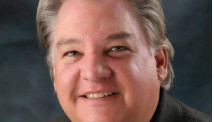 Keith Soko is associate professor of religious ethics and moral theology at St. Ambrose University in Davenport, Iowa
STORY HIGHLIGHTS
- Keith Soko: Catholic bishops say Obama contraception coverage issue wars with conscience
- But theologians disagree, and vast majority of Catholic women use contraception, he says
- He says bishops must respect role of conscience in Catholics who choose contraception
- Soko: Should bishops speak for all Catholics on a public policy on which most disagree with them?
Click on the following to read all Mr. Soko’s argument: http://www.cnn.com/2012/02/03/opinion/soko-catholic-contraception/index.html
Tuesday, November 22, 2011
Rites and Liturgy
The following is taken from Wikipedia:
http://en.wikipedia.org/wiki/List_of_Catholic_rites_and_churches
Rite
The Code of Canons of the Eastern Churches defines "rite" as follows: "Rite is the liturgical, theological, spiritual and disciplinary heritage, distinguished according to peoples' culture and historical circumstances, that finds expression in each autonomous church's way of living the faith."[11]
As thus defined, "rite" concerns not only a people's liturgy (manner of worship), but also its theology (understanding of doctrine), spirituality (prayer and devotion), discipline (canon law).
In this sense of the word "rite", the list of rites within the Catholic Church is identical with that of the autonomous churches, each of which has its own heritage, which distinguishes that church from others, and membership of a church involves participation in its liturgical, theological, spiritual and disciplinary heritage. However, "church" refers to the people, and "rite" to their heritage.[12]
The Code of Canons of the Eastern Churches states that the rites with which it is concerned (but which it does not list) spring from the following five traditions: Alexandrian, Antiochian, Armenian, Chaldean, and Constantinopolitan.[13] Since it covers only Eastern Catholic churches and rites, it does not mention those of Western (Latin) tradition.
The word "rite" is sometimes used with reference only to liturgy, ignoring the theological, spiritual and disciplinary elements in the heritage of the churches. In this sense, "rite" has been defined as "the whole complex of the (liturgical) services of any Church or group of Churches".[14]
Between "rites" in this exclusively liturgical sense and the autonomous churches there is no strict correspondence, such as there is when "rite" is understood as in the Code of Canons of the Eastern Churches. The 14 autonomous churches of Byzantine tradition have a single liturgical rite, while on the contrary the single Latin Church has several distinct liturgical rites.
[edit] List of Catholic liturgical rites
Alexandrian liturgical tradition; 2 liturgical rites
Antiochian (Antiochene or West-Syrian) liturgical tradition; 3 liturgical rites
Armenian Rite; 1 liturgical rite
Chaldean or East Syrian liturgical tradition; 2 liturgical rites
Byzantine (Constantinopolitan) liturgical tradition; 1 liturgical rite
Latin (Western) liturgical rites
Actively celebrated:
- Roman Rite, whose historical forms are usually classified as follows
- Pre-Tridentine Mass (the various pre-1570 forms)
- Tridentine Mass (1570-1970 and still authorized in circumstances indicated in the document Summorum Pontificum as an extraordinary form of the Roman Rite)
- Mass of Paul VI (1970–present)
- Anglican Use (restricted to formerly Anglican congregations)
- Ambrosian Rite (Milan, Italy and neighbouring areas)
- Aquileian Rite (defunct: northeastern Italy)
- Bracarensis Rite (Braga, Portugal)
- Mozarabic Rite (Toledo and Salamanca, Spain)
Defunct or rarely celebrated:
- Durham Rite (defunct: Durham, England)
- Gallican Rite (defunct: Gaul, i.e., France)
- Celtic Rite (defunct: British Isles)
- Sarum Rite (defunct: England)
- Catholic Order Rites (generally defunct)
The following is taken from: http://en.wikipedia.org/wiki/Eastern_Catholic_Churches
Clerical celibacy
Eastern and Western Christian churches have different traditions concerning clerical celibacy and the resulting controversies have played a role in the relationship between the two groups in some Western countries.
Most Eastern Churches distinguish between "monastic" and "non-monastic" clergy. Monastics do not necessarily live as monks or in monasteries, but have spent at least part of their period of training in such a context. Their monastic vows include a vow of celibate chastity.
Bishops are normally selected from the monastic clergy, and in most Eastern Catholic Churches a large percentage of priests and deacons also are celibate, while a portion of the clergy (typically, parish priests) may be married. If someone preparing for the diaconate or priesthood wishes to marry, this must happen before ordination.
In countries where Eastern traditions prevail, a married clergy caused little controversy; but it aroused opposition in other countries to which Eastern Catholics migrated; this was particularly so in the United States. In response to requests from the Latin bishops of those countries, the Sacred Congregation for the Propagation of the Faith set out rules in a letter of 2 May 1890 to François-Marie-Benjamin Richard, the Archbishop of Paris,[69] which the Congregation applied on 1 May 1897 to the United States,[70] stating that only celibates or widowed priests coming without their children should be permitted in the United States. This rule was restated with special reference to Catholics of Ruthenian Rite by the 1 March 1929 decree Cum data fuerit, which was renewed for a further ten years in 1939. Dissatisfaction by many Ruthenian Catholics in the United States gave rise to the American Carpatho-Russian Orthodox Diocese. This rule was abolished with the promulgation of the Decree on the Catholic churches of the Eastern Rite; since then, married men have been ordained to the priesthood in the United States, and numerous married priests have come from eastern countries to serve parishes in the Americas.[71]
Three Eastern Catholic Churches have decided to adopt mandatory clerical celibacy, as in the Latin Church: the India-based Syro-Malankara Catholic Church and Syro-Malabar Catholic Church, and the Ethiopian Catholic Church, which has a long widespread tradition of monasticism
Tuesday, October 11, 2011
Many diocesan parishes disclose their school subsidies

St. Peter’s Cathedral, Rockford, Il—Their bulletin

Monday, September 19, 2011
What Rights Do Catholics Have in the Church?
The following is taken from: http://foryourmarriage.org/canonical-rights/
What Rights Do Catholics Have in the Church?
by Fr. Larry Rice, CSP
 If you quizzed most Catholics about their rights in the Church, you’d probably get more than a few who would summarize those rights with the words “pray, pay, and obey.” Apart from the fact that those are really responsibilities, not rights, they convey the common notion that the folks in the pews really don’t have any rights. But the Church’s Code of Canon Law makes it clear that all the Christian Faithful do, in fact, have rights within the Church. Canons 208 to 231 outline those rights.
Then include the right to make known their needs and desires to the pastors of the Church (212.2), and to make their opinions known to both their pastors and to other people (212.3). People have a right to receive assistance from the spiritual goods of the church, especially the sacraments (213). The Christian Faithful have the right to freely found and govern associations for charitable and religious purposes, and to hold meetings to pursue these purposes (215).
People have a right to religious education (217), and those involved in sacred disciplines like the study and teaching of Theology have the freedom of inquiry and prudently expressing their opinions (218). We have the right to a good reputation, and the right of privacy (220).
Perhaps the least known right of the faithful expressed in Canon Law is the right of due process. According to canon 221, “the Christian faithful can legitimately vindicate and defend the rights which they enjoy in the Church before a competent ecclesiastical court in accord with the norms of the law.” That means what when our rights have been violated, we have the right to seek redress. The Church maintains tribunals, not just to process marriage annulments, but also to allow people to defend their rights.
The Church’s own legal code makes it clear that all the members of the Church have rights, and have the opportunity to exercise those rights in charity and justice.
Subscribe to:
Posts (Atom)